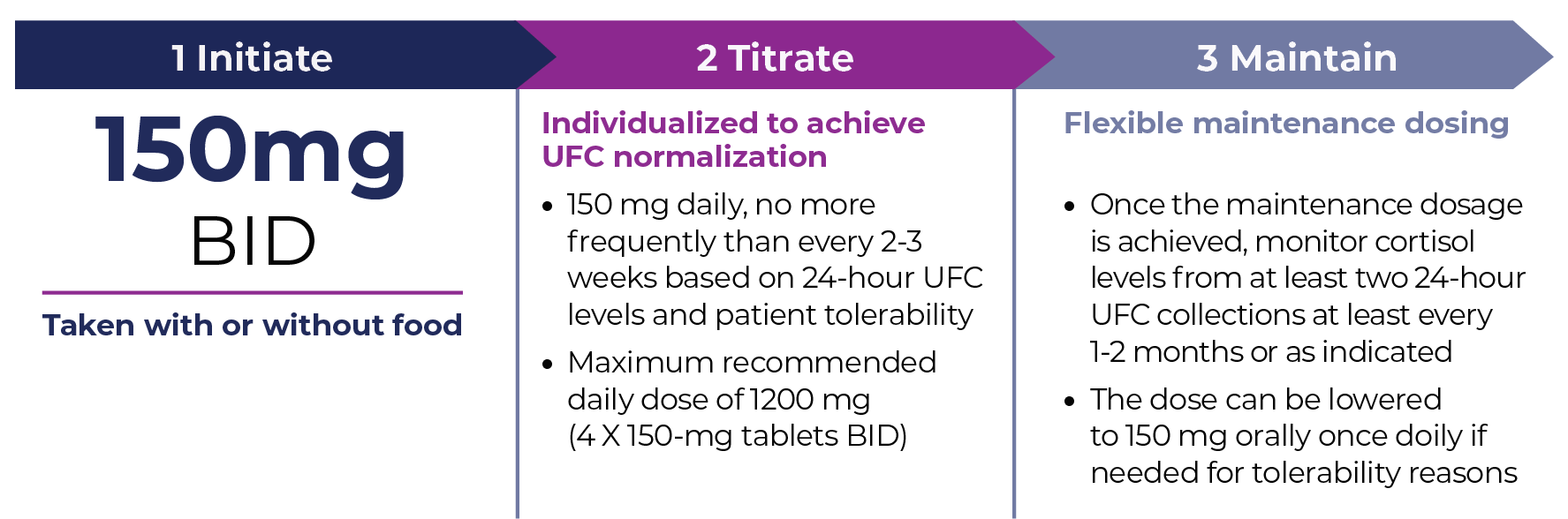
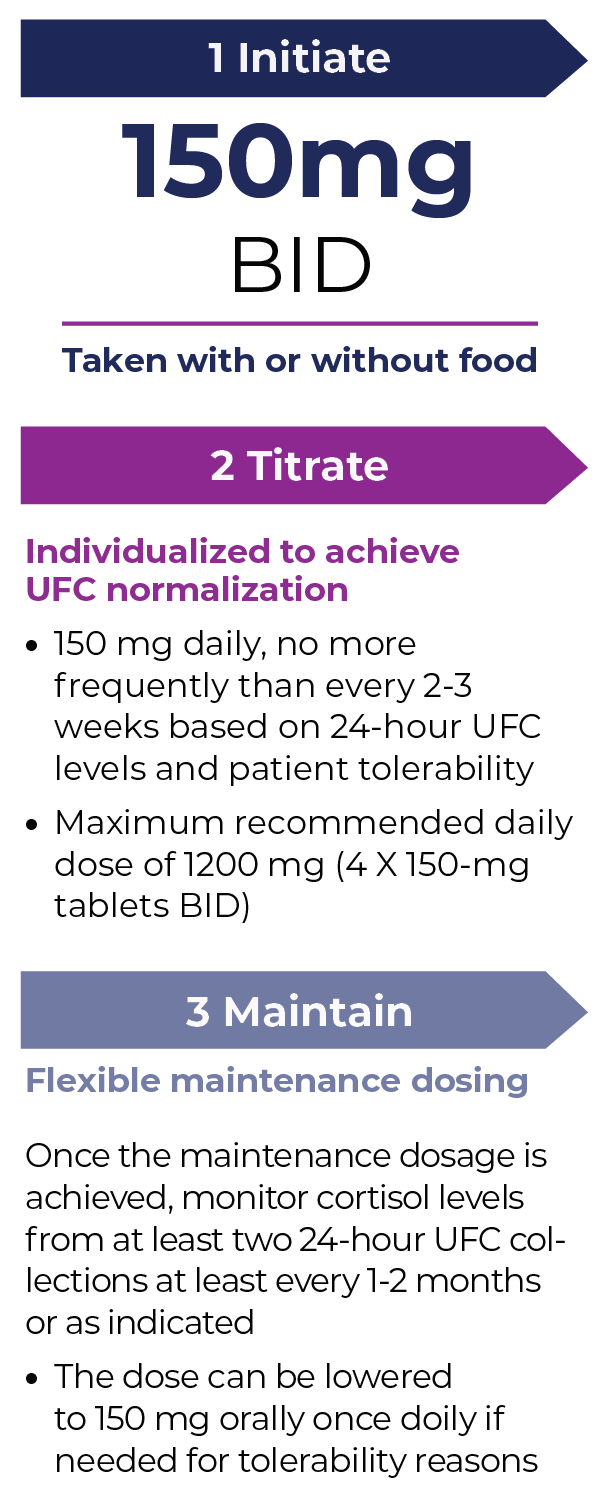
Dosing guidelines
Clinically driven monitoring
Before initiating treatment
- Conduct baseline liver tests (ALT, AST, and total bilirubin)
- Obtain a baseline ECG
- Correct hypokalemia and hypomagnesemia
Continued monitoring
- Conduct an ECG before each dose increase. After a stable dosage is established, monitor routinely for an effect on the QT interval, and monitor blood potassium and magnesium levels periodically during treatment
- Monitor 24-hour UFC, morning serum or plasma cortisol, and patient’s signs and symptoms for hypocortisolism periodically during RECORLEV® treatment
- If 24-hour UFC levels remain above the upper normal limit after treatment with the maximum recommended dosage, or the patient cannot tolerate treatment, consider discontinuing and switching patient to another therapy
Liver tests
- Serious hepatotoxicity has been reported in patients receiving RECORLEV, and therefore frequent monitoring of liver tests is recommended
- Monitor liver enzymes and bilirubin weekly for at least 6 weeks after starting RECORLEV, every 2 weeks for the next 6 weeks, monthly for the next 3 months, and then as clinically indicated
- After any dose interruption or dose increase, monitor on a weekly basis until a stable dosage is achieved
See Full Prescribing Information for dosage management and modification across AST/ALT and total bilirubin values.
A clinical pharmacist is available to
support you in the management of
monitoring and dose modifications.
Call 1-844-444-RCLV (7258) for support